Ensuring Space Mission Safety and Compliance: A Comprehensive Guide
Learn about the critical aspects of space mission safety and compliance, including regulations, best practices, and OrbitalReclamation's commitment to responsible space exploration.
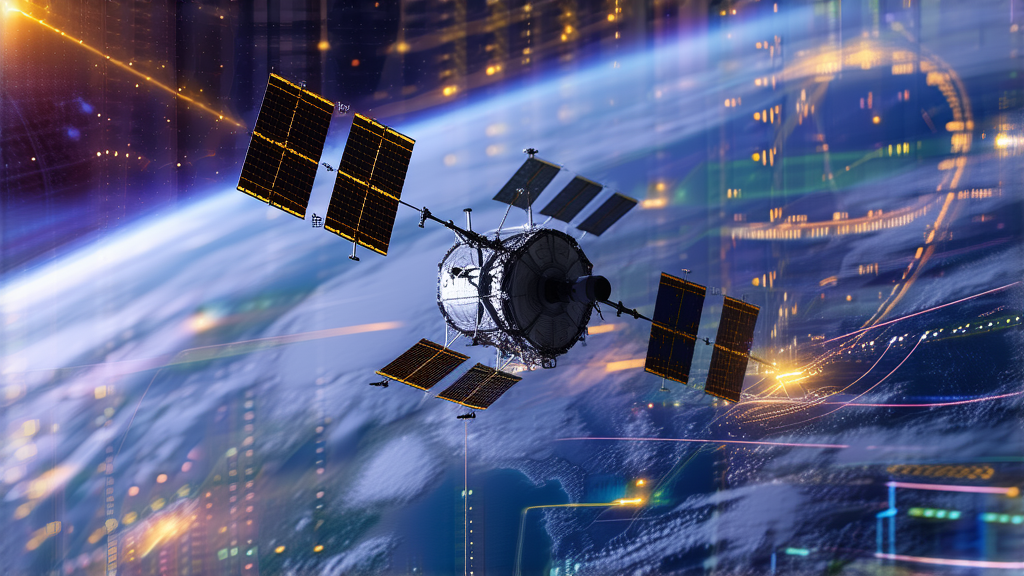
Ensuring Space Mission Safety and Compliance: A Comprehensive Guide
The vastness of space holds immense promise for scientific discovery, technological innovation, and human exploration. However, venturing beyond Earth's protective atmosphere comes with inherent risks. Ensuring the safety of astronauts, spacecraft, and the space environment itself is paramount to the success and sustainability of space exploration. This guide provides a comprehensive overview of space mission safety and compliance, covering key regulations, best practices, and OrbitalReclamation's commitment to responsible spaceflight.
Key Takeaways:
- Space mission safety and compliance are essential for the success and sustainability of space exploration.
- A thorough understanding of international agreements, national regulations, and industry best practices is crucial.
- OrbitalReclamation is dedicated to upholding the highest standards of safety and compliance throughout all its missions.
Introduction: The Critical Role of Safety and Compliance in Space Exploration
The pursuit of knowledge and advancement often drives humanity to explore new frontiers. Space exploration, with its promise of scientific discovery and technological innovation, is no exception. However, venturing beyond Earth's protective atmosphere presents unique challenges and inherent risks.
Space missions involve complex systems operating in a harsh and unforgiving environment. The potential consequences of failures can be severe, impacting not only the mission itself but also the lives of astronauts and the integrity of the space environment. A robust framework of spaceflight regulations and compliance measures is essential to mitigate these risks and ensure responsible space exploration.
In practice, introducing the critical role of safety and compliance in space exploration works best when teams align policies with how data flows through space mission safety and compliance. Establish clear ownership, document access rules, and review usage patterns regularly to reduce risk and improve accountability. Key considerations include space exploration, safety, compliance.
Understanding the Regulatory Landscape for Space Missions
The legal framework governing space activities comprises a complex web of international agreements and national regulations. This intricate system aims to establish clear guidelines, promote cooperation among nations, and safeguard the interests of all stakeholders involved in space exploration.
International Agreements:
Several key treaties lay the foundation for responsible space exploration:
- The Outer Space Treaty (1967): This foundational treaty establishes space as the "province of all mankind" and prohibits the placement of weapons of mass destruction in orbit or on celestial bodies. It also outlines principles of peaceful exploration and the responsibility of states for national space activities.
- The Rescue Agreement (1968): This agreement obligates nations to assist astronauts in distress, regardless of nationality, fostering international cooperation in emergency situations.
National Space Agencies:
National space agencies play a crucial role in implementing and enforcing safety regulations within their respective countries. They develop detailed guidelines for launch operations, spacecraft design standards, and mission planning, conducting rigorous reviews and inspections to ensure compliance with all applicable standards. For example, the hypothetical "United States Space Agency" (USSA) might mandate specific testing protocols for propulsion systems or require adherence to orbital debris mitigation guidelines.
National agencies also collaborate with international partners to harmonize regulations and share best practices, contributing to a global framework for space safety.
In practice, understanding the regulatory landscape for space missions works best when teams align policies with how data flows through space mission safety and compliance. Key considerations include international agreements, national space agencies, regulations.
Compliance Requirements: Navigating the Complexities
Navigating the complex web of space mission safety and compliance requirements can be challenging. It demands a meticulous approach to documentation, adherence to strict protocols, and continuous monitoring throughout all mission phases.
Understanding the specific regulations applicable to each mission, including launch site regulations, orbital debris mitigation guidelines, and spacecraft design standards, is crucial. Regular communication with regulatory agencies and participation in industry best practice forums are essential for staying informed about evolving requirements.
For example, a hypothetical lunar lander mission might require obtaining permits from multiple agencies, adhering to specific launch trajectory constraints to avoid populated areas, and implementing data reporting protocols for orbital debris tracking.
Key Elements of Space Mission Safety
Ensuring the safety of space missions involves a multifaceted approach that encompasses various critical elements:
- Robust Design and Engineering: Spacecraft and launch vehicles must be designed and built to withstand the harsh conditions of spaceflight, including extreme temperatures, radiation, and micrometeoroids. Redundant systems and fail-safe mechanisms are essential to mitigate potential failures. For example, a hypothetical lunar lander might incorporate redundant propulsion systems and landing gear to ensure safe touchdown even in case of partial system failure.
- Rigorous Testing and Simulation: Extensive ground testing and simulations are conducted to verify the functionality and reliability of spacecraft systems under various scenarios. This includes thermal vacuum testing, vibration testing, and mission rehearsals. For example, a hypothetical Mars rover might undergo simulated Martian terrain navigation tests in a controlled environment.
- Launch Site Safety: Launch sites are equipped with sophisticated safety systems and procedures to protect personnel, infrastructure, and the surrounding environment during launch operations. This includes emergency abort systems, fire suppression systems, and exclusion zones around the launch pad.
In practice, key elements of space mission safety works best when teams align policies with how data flows through space mission safety and compliance. Key considerations include launch vehicle safety, orbital operations, re-entry procedures.
Best Practices for Ensuring Space Mission Safety and Compliance
Beyond regulatory compliance, adopting industry best practices is crucial for enhancing mission safety. These include:
- Risk Management: Implementing a robust risk management framework that identifies, analyzes, and mitigates potential hazards throughout all mission phases. This involves conducting thorough hazard analyses, developing contingency plans, and establishing clear communication protocols. For example, a hypothetical asteroid mining mission might identify the risk of collision with space debris and implement avoidance maneuvers or shielding technologies.
- Mission Simulation: Utilizing advanced simulators to train astronauts and ground crews, rehearse critical procedures, and test the response to unexpected events. High-fidelity simulations can recreate realistic scenarios, allowing teams to refine their skills and decision-making processes. For example, a hypothetical space station crew might practice emergency procedures for depressurization or fire in a simulated environment.
- Collaboration and Communication: Fostering a culture of open communication and collaboration among all stakeholders, including mission control, engineers, scientists, and regulatory agencies. This ensures that information is shared effectively, concerns are addressed promptly, and decisions are made collectively. For example, during a hypothetical interplanetary mission, regular communication between the spacecraft crew and ground control teams is essential for monitoring system health, resolving technical issues, and making informed decisions.
In practice, best practices for ensuring space mission safety and compliance works best when teams align policies with how data flows through space mission safety and compliance. Key considerations include risk management, mission simulation, collaboration.
Space Mission Safety and Compliance: A Continuous Process
Space mission safety and compliance is not a one-time event but an ongoing process that requires continuous improvement and adaptation.
- Post-Mission Analysis: Conducting thorough post-mission analyses to identify lessons learned, evaluate the effectiveness of safety procedures, and inform future missions. This includes reviewing telemetry data, investigating any anomalies or incidents, and documenting best practices.
- Technology Advancement: Embracing technological advancements that enhance mission safety, such as autonomous systems, advanced sensors, and improved propulsion technologies. Continuous research and development are essential for mitigating risks and pushing the boundaries of space exploration. For example, developing self-diagnostic systems in spacecraft can help identify potential failures early on and enable proactive maintenance.
In practice, space mission safety and compliance: a continuous process works best when teams align policies with how data flows through space mission safety and compliance. Key considerations include post-mission analysis, lessons learned, future developments.
OrbitalReclamation's Commitment to Space Mission Safety and Compliance
At OrbitalReclamation, we prioritize safety and compliance as fundamental principles guiding all our operations. We adhere to the highest industry standards, collaborate closely with regulatory bodies, and continuously strive to improve our practices. Our commitment to responsible space exploration ensures the well-being of our astronauts, protects valuable assets, and preserves the integrity of the space environment for generations to come.
In practice, orbitalreclamation's commitment to space mission safety and compliance works best when teams align policies with how data flows through space mission safety and compliance. Key considerations include OrbitalReclamation, commitment, responsible space exploration.
FAQ
What are the main international agreements governing space mission safety? The Outer Space Treaty (1967) and the Rescue Agreement (1968) are key international agreements that lay the foundation for safe and responsible space exploration.
How does OrbitalReclamation ensure compliance with spaceflight regulations?
OrbitalReclamation adheres to the highest industry standards, collaborates closely with regulatory bodies, and continuously strives to improve our practices. We prioritize safety and compliance as fundamental principles guiding all our operations.
What steps are taken to mitigate the risk of orbital debris? Orbital debris mitigation is a crucial aspect of space mission safety. This involves designing spacecraft for deorbiting at the end of their operational life, adhering to international guidelines for debris mitigation, and actively tracking and monitoring existing debris.
What role does mission control play in ensuring safety during a space mission?
Mission control plays a vital role in monitoring the health and status of the spacecraft, communicating with astronauts, making critical decisions in real-time, and coordinating with ground support teams to ensure the safety and success of the mission.
Related Articles
- Navigating Satellite End-of-Life Management with Orbital Reclamation
- Navigating Orbital End-of-Life Management: A Comprehensive Guide
Conclusion
Space mission safety and compliance are paramount concerns for any spacefaring organization. By adhering to international regulations, implementing best practices, and fostering a culture of safety, we can ensure the success of space exploration endeavors while protecting the well-being of astronauts and the integrity of the space environment.