Orbital Sustainability: Ensuring the Future of Space Exploration
Learn about the importance of orbital sustainability and how OrbitalReclamation is working to ensure the responsible use of Earth's orbit for future generations.
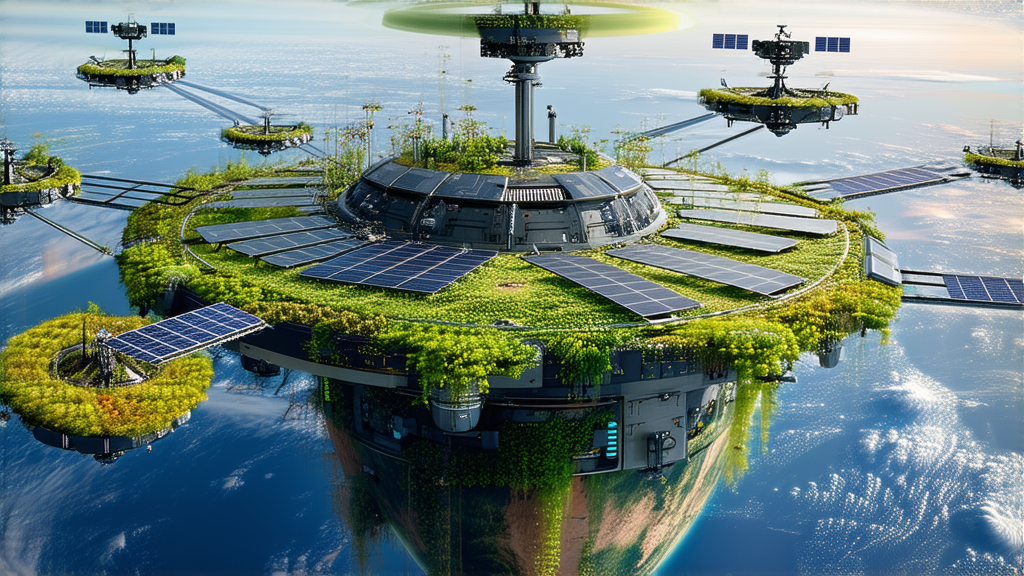
Orbital Sustainability: Ensuring the Future of Space Exploration
The vast expanse of space holds immense potential for scientific discovery, technological advancement, and even human habitation. However, as our presence in orbit grows, so does the need to ensure its long-term sustainability. Unchecked growth can lead to a future where space becomes cluttered with debris, resources are depleted, and access is restricted.
Key Takeaways: Orbital sustainability is crucial for the long-term viability of space exploration. By addressing challenges like space debris and resource depletion, we can ensure responsible use of Earth's orbit for generations to come.
Introduction: The Growing Need for Orbital Sustainability
Since the dawn of the space age, humanity has ventured beyond Earth's atmosphere, leading to countless scientific breakthroughs and technological innovations. However, this progress comes at a cost.
Decades of space activity have resulted in a growing accumulation of debris orbiting our planet. These defunct satellites, spent rocket stages, and fragments from collisions pose a significant threat to active spacecraft and future missions. The risk of collisions, known as the Kessler Syndrome, could lead to a cascading effect, rendering entire orbital regions unusable.
Furthermore, the finite nature of resources in space necessitates responsible management and utilization. As we venture further into the cosmos, ensuring access to essential materials like water, fuel, and building materials becomes paramount.
In practice, introduction: the growing need for orbital sustainability works best when teams align policies with how data flows through orbital sustainability. Establish clear ownership, document access rules, and review usage patterns regularly to reduce risk and improve accountability. Key considerations include space exploration, orbital debris, resource depletion.
Understanding the Challenges to Orbital Sustainability
Two primary challenges threaten the long-term sustainability of our presence in orbit:
Space Debris Mitigation
The increasing density of objects in low Earth orbit (LEO) presents a significant risk to active satellites and future space missions. Even small fragments traveling at high velocities can cause catastrophic damage upon impact. The 2009 collision between an Iridium communications satellite and a defunct Russian Cosmos satellite, which generated over 2,000 pieces of trackable debris, highlights the real-world consequences of orbital congestion.
Responsible Space Exploration
As we expand our presence in space, access to resources becomes increasingly critical. Water, fuel, and building materials are essential for sustaining human life and supporting long-duration missions. Relying solely on Earth-based resupply is unsustainable in the long term. For example, a mission to Mars would require vast quantities of propellant. In-situ resource utilization (ISRU) technologies could enable astronauts to extract water ice from Martian soil or utilize local resources for building materials, reducing our dependence on Earth-based supplies.
In practice, understanding the challenges to orbital sustainability works best when teams align policies with how data flows through orbital sustainability. Establish clear ownership, document access rules, and review usage patterns regularly to reduce risk and improve accountability. Key considerations include space debris, Kessler Syndrome, resource scarcity.
Technological Innovations for Orbital Sustainability
Advancements in robotics, automation, and materials science are essential for addressing the challenges of orbital sustainability:
Robotics and Automation
Autonomous robots can play a vital role in debris removal operations, performing tasks such as capturing and deorbiting defunct satellites. Advanced sensors and artificial intelligence enable them to navigate complex environments and make real-time decisions.
Advanced Materials
Developing lightweight, durable materials that are resistant to the harsh conditions of space is crucial for building sustainable spacecraft and infrastructure. Self-healing materials and recyclable components can contribute to a circular economy in orbit.
Spacecraft Design
Designing spacecraft with end-of-life disposal plans integrated from the outset is essential for minimizing future debris generation. This includes incorporating features that facilitate controlled deorbiting or atmospheric reentry at the end of a mission's lifespan.
In practice, technological innovations for orbital sustainability works best when teams align policies with how data flows through orbital sustainability. Establish clear ownership, document access rules, and review usage patterns regularly to reduce risk and improve accountability. Key considerations include robotics, automation, advanced materials.
International Cooperation and Policy
Addressing the challenges of orbital sustainability requires global collaboration and coordinated efforts:
Space Traffic Management
Establishing clear guidelines and regulations for satellite deployment and operations is essential for preventing collisions and ensuring responsible use of orbital space. International organizations play a key role in fostering cooperation and developing best practices.
Global Agreements
International treaties and agreements are crucial for establishing legal frameworks and promoting responsible behavior in space. These agreements should address issues such as debris mitigation, resource allocation, and planetary protection.
Regulatory Frameworks
Developing comprehensive regulatory frameworks that govern the use of orbital resources and promote sustainable practices is essential. This includes addressing issues such as licensing requirements, liability for damage caused by space debris, and mechanisms for resolving disputes over orbital slots.
In practice, international cooperation and policy works best when teams align policies with how data flows through orbital sustainability. Establish clear ownership, document access rules, and review usage patterns regularly to reduce risk and improve accountability. Key considerations include space traffic management, global agreements, regulatory frameworks.
Orbital Sustainability: A Long-Term Vision
A sustainable future in space requires a long-term vision that encompasses both technological advancements and ethical considerations:
Future Space Habitats
As we venture further into the cosmos, establishing permanent settlements on other celestial bodies becomes increasingly important. Sustainable habitat design must consider resource utilization, waste management, and environmental impact.
Sustainable Space Tourism
The growth of space tourism presents both opportunities and challenges for orbital sustainability. Developing eco-friendly spacecraft and promoting responsible tourism practices is crucial for minimizing our footprint in space.
Planetary Protection
Protecting celestial bodies from contamination by Earth-based life forms is essential for preserving their scientific integrity and potential for future exploration. Adhering to planetary protection protocols during missions to other planets and moons is paramount.
In practice, orbital sustainability: a long-term vision works best when teams align policies with how data flows through orbital sustainability. Establish clear ownership, document access rules, and review usage patterns regularly to reduce risk and improve accountability. Key considerations include future space habitats, sustainable space tourism, planetary protection.
Orbital Sustainability by OrbitalReclamation
OrbitalReclamation is committed to advancing orbital sustainability through innovative technologies and responsible practices. Our mission is to develop solutions that address the challenges of space debris, resource depletion, and environmental impact.
We are currently developing a robotic spacecraft designed for active debris removal, capable of capturing and deorbiting defunct satellites. In addition, we are exploring ISRU techniques for extracting water ice from lunar regolith, which can be used as a source of drinking water and rocket propellant. Our commitment to sustainability extends beyond technological solutions; we actively engage with international organizations and policymakers to promote responsible space practices and advocate for global cooperation in orbital sustainability efforts.
In practice, orbital sustainability by orbitalreclamation works best when teams align policies with how data flows through orbital sustainability. Establish clear ownership, document access rules, and review usage patterns regularly to reduce risk and improve accountability. Key considerations include OrbitalReclamation mission, solutions, commitment to sustainability.
Orbital Sustainability Principles
This section expands on orbital sustainability principles with practical guidance for orbital sustainability. Use clear policies, strong access controls, and ongoing reviews to protect sensitive data. For teams adopting orbital sustainability, prioritize user training, audit trails, and repeatable workflows to keep collaboration secure and efficient.
In practice, orbital sustainability principles works best when teams align policies with how data flows through orbital sustainability. Establish clear ownership, document access rules, and review usage patterns regularly to reduce risk and improve accountability. Key considerations include active debris removal, in-situ resource utilization, circular economy.
Key Takeaways
This section expands on key takeaways with practical guidance for orbital sustainability. Use clear policies, strong access controls, and ongoing reviews to protect sensitive data. For teams adopting orbital sustainability, prioritize user training, audit trails, and repeatable workflows to keep collaboration secure and efficient.
FAQ
- What is orbital sustainability?
- How does orbital sustainability improve security?
- What should I look for when evaluating orbital sustainability?
- How do I get started with orbital sustainability?
Conclusion
Orbital Sustainability helps teams stay secure and productive. Choose the right approach, implement best practices, and review access regularly. Ready to take the next step? Reach out to LockItVault to see how we can help.